






Which gemstones hold their value best in fine jewellery

When considering which gemstones hold their value best in fine jewellery, the answer hinges on four very specific factors: stone species, origin, treatment status, and certification. Colored gemstones outperformed the S&P 500 from 2020 to 2023. In the same period, natural diamond values declined. That single data point reframes the entire conversation about fine jewellery as a financial holding, because the distinction between a beautiful piece and an investment-grade piece is not about design or prestige.
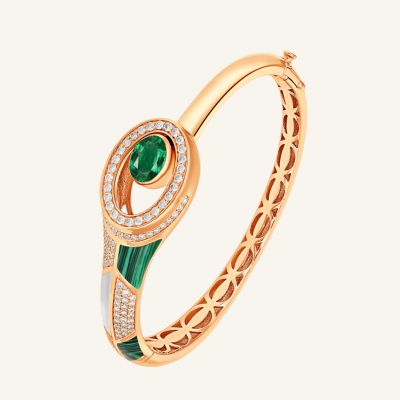
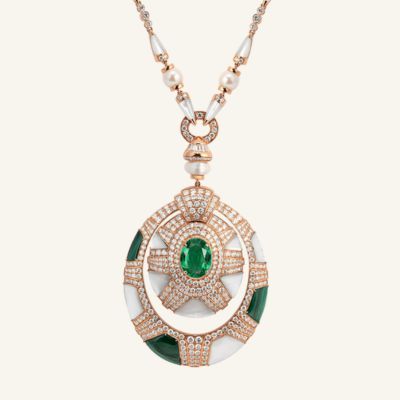
At Soit Belle, our signature collections are built around natural gemstones, including emeralds, rubies, and pearls, selected precisely because these materials carry both artistic meaning and enduring worth. Serious collectors ask which gemstones hold their value best in fine jewellery before they buy, not after. The market data is clear, and understanding it changes how you acquire, hold, and eventually pass on what you own.
Which gemstones hold their value best in fine jewellery, the long-term leaders
Not all gemstones appreciate. Many depreciate the moment they leave a retail case. The stones that consistently retain and grow in value share a common trait: they come from sources that cannot produce more of them. That structural scarcity, combined with rising global wealth and collector demand, is what drives long-term price appreciation in fine gemstones.
Burmese rubies and Colombian emeralds: the investment apex
Burmese rubies have posted annualized gains of 12% to 24% every year from 2019 through 2023. Few gemstone categories have matched that consistency across the same period. The benchmark piece, the Sunrise Ruby, a 25.59-carat unheated Burmese stone with a "Pigeon Blood" designation, sold at auction for $32 million, setting the global standard for what a single gemstone can command. The "Pigeon Blood" label is not marketing. According to GRS and Gübelin classification standards, it refers to a precise color specification requiring a saturated, pure red with a faint blue secondary hue, found almost exclusively in Myanmar's Mogok Valley, where the finest ruby deposits are now largely exhausted.
Colombian emeralds occupy an equally commanding position. Demand has risen sharply against a fixed and shrinking supply from the Muzo and Chivor mines, a trend documented by the International Colored Gemstone Association and reflected in major auction results through 2025 and into 2026. A no-oil designation means no detectable clarity treatment. Stones meeting this standard command $50,000 to $150,000 per carat for top-quality material, while oiled stones of similar appearance sell for a fraction of that. The "no-oil" designation is not a cosmetic distinction; it is a value multiplier of 100% to 200% over treated equivalents. At Soit Belle, our Artistry collection draws directly from this tradition, featuring natural emeralds selected for their origin quality and alignment with what the investment market values. For collectors seeking deeper context on Colombian material and provenance, see Sotheby's detailed guide to Colombian emeralds.
Kashmir sapphires and Paraíba tourmalines: rarity in cornflower and neon
Kashmir sapphires have posted 15% to 20% annualized growth over the past decade, with appreciation accelerating to 25% to 30% between 2021 and 2024. Untreated stones with Kashmir's signature velvety cornflower blue now command $80,000 to $120,000 per carat at specialist auction. The reason is straightforward: the Kashmir deposits in northern India have been exhausted for decades. There is no new supply, and the stones already in circulation are being absorbed steadily by private collections and institutional buyers.
Paraíba tourmalines present an even more dramatic growth story. These neon-blue and blue-green stones from Brazil's Paraíba state jumped 118% in value in 2022 alone, followed by 27% in 2023. By 2025 and into 2026, top-quality Brazilian Paraíba material has reached above $300,000 per carat for vivid, large stones, according to specialist dealer reports and auction results. No active mines remain in Paraíba's original deposit area. New finds in Mozambique and Nigeria carry the same species name but command significantly lower prices. Origin specificity is not a collector's preference; it is the market's pricing mechanism.
Alexandrite and natural pearls: the underestimated performers
Alexandrite ranked among the top-performing gemstones in 2024, driven by one defining characteristic: it changes color dramatically from green in daylight to red under incandescent light. Stones that demonstrate a vivid, clean color shift from a strong green to a strong red, particularly those from Russia's now-depleted Ural deposits, are the most prized. The intensity of that color change directly determines the premium a stone commands, with untreated Russian alexandrite reaching $10,000 to $50,000 per carat for exceptional examples.
Natural pearls occupy a different category. They are not the highest-appreciation gemstone, but they are among the most stable heritage-driven holdings in the fine jewellery market. The distinction from cultured pearls matters enormously in investment terms: natural pearls form without human intervention over many years and require certification to confirm their status. At Soit Belle, our Bahr collection draws its identity from the Gulf's pearl-diving tradition, a heritage that gives natural pearl jewellery both cultural depth and enduring collector appeal beyond any single year's market movement.
Why origin ranks among the most powerful value drivers in colored gemstones
Two rubies can be identical in color, clarity, and cut. One might sell for $50,000 per carat and the other for $500,000. The difference is not visible under any loupe. It is documented on a laboratory report: one stone is Burmese, unheated; the other is from a different origin. Documented cases confirm that origin verification alone can increase a stone's market value by 100% or more, and understanding why requires understanding supply economics.
What depleted mines mean for price appreciation
When a mining deposit closes or exhausts its production, no new comparable stones enter the market. Kashmir's sapphire mines are gone. Burma's finest ruby deposits are largely exhausted. The Colombian emerald fields at Muzo and Chivor produce a fraction of their historical output. This creates an economic condition that few other asset classes replicate: a fixed, non-renewable supply against growing global demand from collectors, institutions, and affluent buyers across Asia, the Middle East, and the West. Untreated Burmese rubies, for example, command more than double the value of treated rubies from other origins, purely on the basis of where the stone formed and what remains available.
Provenance documentation and the auction premium
Major auction houses, including Sotheby's and Christie's, commonly require or strongly favor documented origin confirmation before presenting a colored gemstone as a premium lot. A laboratory report stating "Burma, no heat" on a ruby, or "Kashmir" on a sapphire, can increase the hammer price by 100% or more compared to a visually identical stone without verified provenance. This is not subjective. It is how auction catalogues are written and how bidders make decisions. Provenance documentation converts a beautiful stone into a verifiable asset. Without it, the stone may be equally lovely, but it lacks the pedigree that serious buyers will pay a significant premium to acquire. For collectors seeking an authoritative reference on Burmese rubies and market standards, consult Sotheby's collectors' guide to the Burmese ruby.
How gem treatments quietly erode value
The majority of colored gemstones sold in retail jewellery worldwide have been treated. Heating is used on rubies and sapphires to improve color and clarity. Oiling is applied to emeralds to reduce the visibility of surface fractures. Fracture-filling and diffusion are used on a range of stones to enhance appearance. None of these treatments are secret, and disclosure is legally required. But the treatment status itself permanently limits how high the resale potential can reach. For a focused discussion of how treatment affects emerald pricing and long-term value, see treatment effects on emerald value.
The untreated premium explained
Heated rubies and sapphires trade at a fraction of their unheated equivalents, even when the visual difference is imperceptible to the naked eye. A no-oil Colombian emerald can be twice the price of an oiled stone of identical appearance, and for museum-quality stones, the premium reaches 200% or more. The reasoning is simple: untreated stones are genuinely rare in a market saturated with treated material, and collectors pay for rarity. Treatment prevalence in the mass market is precisely what makes certified, untreated gems so uncommon and so valuable. A laboratory report confirming "no heat" or "no oil" is not merely a technical notation; it is a market-facing rarity certificate.
Treatments to avoid if you are buying to hold value
Fracture-filling and resin enhancement reduce collectible status significantly because they are irreversible and can degrade over time, requiring strict maintenance to preserve the stone's appearance. Diffusion and dyeing alter surface characteristics, making stones appear to be something they are not, and these alterations are considered the most damaging to resale credibility. Even heating, the most widely accepted treatment in the industry, reduces a ruby or sapphire's standing compared to an unheated equivalent of identical appearance. Once disclosed, treated status permanently constrains what serious collectors will pay, however attractive the stone appears to a general buyer.
The certifications that give investment gems their credibility
Buyers frequently overlook certification until they attempt to resell. At that point, they discover that which laboratory issued the report matters as much as what the report says. The international market for investment-grade colored gemstones operates on a very short list of accepted authorities.
GIA, SSEF, and Gübelin: the laboratories most accepted for investment-grade colored gemstones
For investment-grade colored gemstones, GIA (Gemological Institute of America), SSEF (Swiss Gemmological Institute), and Gübelin GemLab carry the global authority accepted by Christie's, Sotheby's, and major private dealers. GIA applies a strictly conservative scientific approach to origin determination, assigning geographic provenance only when the analytical data is unambiguous. SSEF is widely regarded as the standard for origin precision and treatment detection, leveraging deep research collections and advanced trace element analysis to confirm provenance for the most valuable stones. Gübelin complements both with rigorous treatment reporting and is equally respected across the international auction circuit.
GRS (Gemological Research SwissLab) is respected specifically for its color branding, including the "Pigeon's Blood" designation for rubies, and its origin opinions carry weight in specialist circles. However, primary treatment-status and origin verification should come from GIA, SSEF, or Gübelin for stones intended for top-tier resale. For high-value colored stone investment purposes, reports from these three laboratories carry the pedigree required for international resale at the highest levels; stones without such documentation are significantly harder to place at auction or with serious private buyers. For a practical comparison of laboratory reports and how they differ in format and emphasis, read Gemstone certification explained, comparing GIA, GRS and other reports.
How a certification grade moves the price
Price increases in the investment gemstone market are not linear. As a stone approaches the top 1% of its species for color saturation and clarity, each incremental improvement in grading translates to a substantial increase in value. Geographic origin confirmation alone can double a stone's market value. An "unheated" notation on a ruby report shifts the buyer pool from general jewellery purchasers to dedicated collectors with significantly larger acquisition budgets. Certification does not grant value; it verifies the rarity that generates it. Buying any stone intended to hold or grow in value without a report from GIA, SSEF, or Gübelin is purchasing a beautiful object, not an investment.
A practical approach to buying and selling with confidence
Where to source certified, natural gemstone pieces
Buy from jewellery houses and dealers who disclose gemstone origin and treatment status upfront, who work with GIA-, SSEF-, or Gübelin-certified stones, and who can provide full documentation at the point of sale. Transparency around natural gemstone sourcing is the clearest signal that a brand takes quality seriously. At Soit Belle, our natural emerald and ruby pieces within the Artistry and D'Oprah collections are built around verified, natural gemstones selected for their origin quality and alignment with investment-grade standards. Our 240-hour handcrafted process is a reflection of that same philosophy, nothing rushed, nothing compromised. The documentation that accompanies an investment-grade piece should be treated as part of the piece itself, as important as the setting. Explore specific examples of our handcrafted jewellery such as the Luxury Rose Gold Pearl Sapphire Diamond Necklace | Dubai, soitbelle.ae to see how gemstones are integrated into refined settings.
Resale channels and realistic return expectations
Specialist auction houses deliver the highest prices for top-tier certified stones, but involve longer timelines, seller's premiums, and a selection process that favors stones with impeccable documentation and provenance. Specialist gemstone dealers offer faster liquidity, though buy-back rates vary widely by dealer, stone quality, and market conditions, typically well below retail value, reflecting the margin a dealer requires to resell. Online investment gem platforms are growing in reach but suit mid-range stones better than the top tier, where relationship-based private sales and auction houses remain dominant.
Set honest expectations before you buy. Many market participants treat investment gems as medium- to long-term holdings, often five years or more, and the strongest returns come to buyers who entered the market with certified, untreated, origin-verified stones from the beginning. The buyers who struggle at resale are almost always those who purchased on beauty alone: without documentation, without certification, and without understanding the treatment status of what they were acquiring.
Choosing with clarity: which gemstones hold their value best in fine jewellery
Which gemstones hold their value best in fine jewellery? Those with verifiable origin from a depleted or limited source, untreated or minimally treated status confirmed by a credible laboratory report, and top-tier color and clarity within their species. Burmese rubies, Colombian emeralds, Kashmir sapphires, Paraíba tourmalines, and natural pearls lead the field, but only when acquired with the documentation that confirms what they are.
Buying fine jewellery through this lens is not about reducing a beautiful piece to a financial instrument. It is about choosing with the same intentionality that defines the stones themselves. A piece built around a natural emerald or ruby of verified origin is both a personal legacy and an enduring holding, something that carries meaning for the person who wears it and value for those who inherit it.
At Soit Belle, every collection is designed around that principle: natural gemstones, handcrafted over hundreds of hours, built to last across generations. We invite you to explore our collections and discover pieces where artistry and lasting value exist in the same setting. See for example our Luxury Rose Gold Pearl Sapphire Earrings | Fine Jewellery Dubai, soitbelle.ae and pieces that reflect the same commitment to material and craft. We welcome those who want to understand what they are acquiring before they acquire it; our team is available to discuss origin, certification, and selection in detail, and can point to specific items such as the Luxury Emerald Sapphire Diamond Earrings | 18K Gold, soitbelle.ae for one-to-one consultation.