






Rose gold vs white gold: Which suits your ring best?
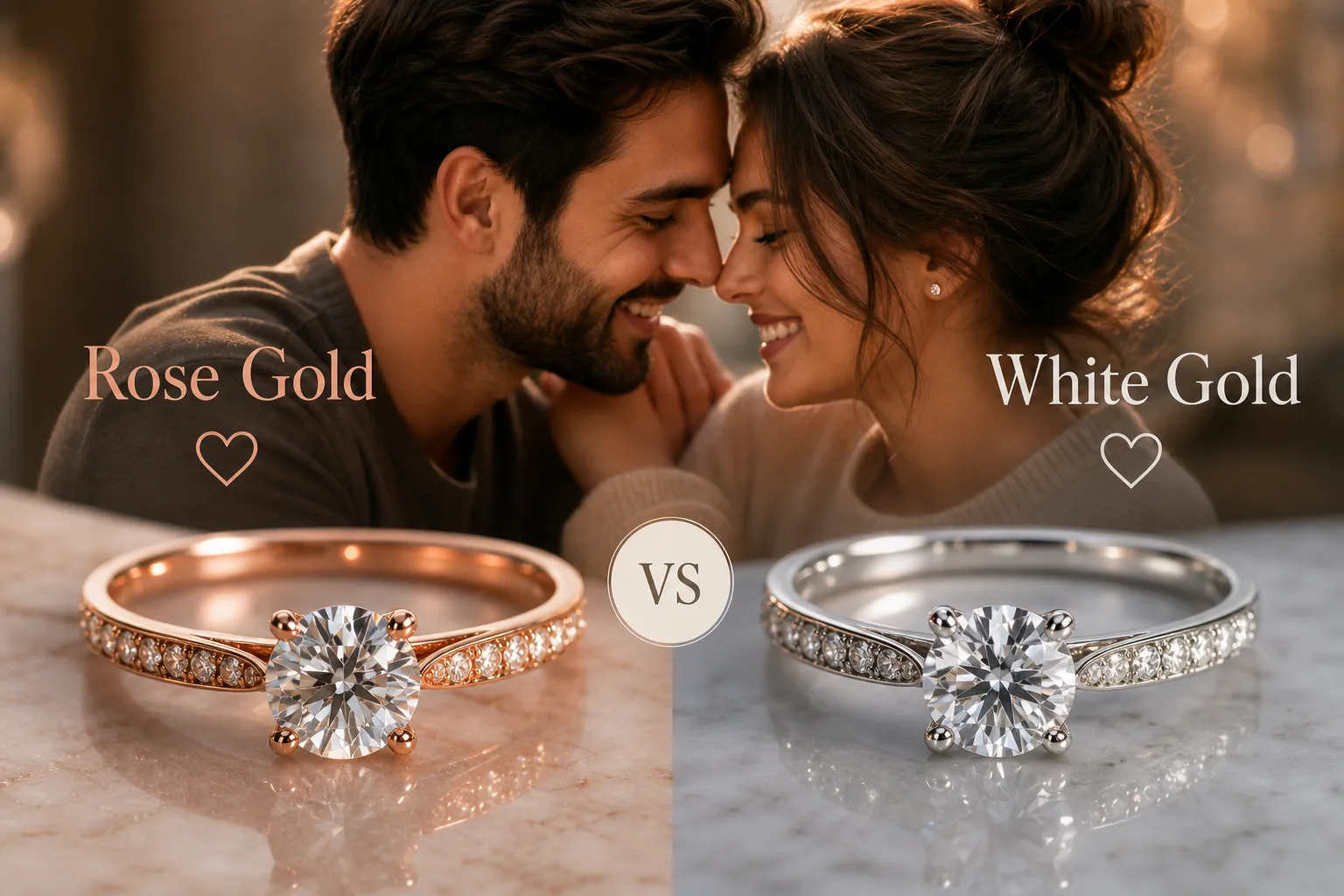
You've found the ring. The design is exactly right. Now comes the question that sends most buyers straight to the internet: rose gold or white gold? Both are beautiful. Both are popular. And every forum thread gives you a different answer depending on who's responding.
This white gold vs rose gold comparison cuts through that confusion across the factors that actually matter: what each metal is made of, how it holds up with daily wear, which skin tones it flatters, allergy risk, gemstone pairing, and the real long-term cost of ownership. At Soit Belle, Dubai's fine jewellery atelier, rose gold has long been a signature metal across the house's collections, a design philosophy built over years of working intimately with this alloy, and one that informs the perspective throughout this guide.
What these two metals are actually made of
The color of your ring starts at the alloy level. Understanding the composition of each metal explains everything else: why one requires replating, why one is harder, and why one is more likely to irritate your skin.
The copper that creates rose gold's warmth
Rose gold is a gold-copper-silver alloy. In 18k rose gold, 75% is pure gold, roughly 22 to 25% is copper, and the remainder is silver. The copper produces the warm, pinkish hue and also makes the alloy harder than yellow gold by nature. Lower karat versions, such as 14k, contain up to 38% copper, producing a deeper, more reddish tone. Rose gold typically contains no nickel or palladium, which matters considerably for people with sensitive skin.
How white gold achieves its silvery appearance
White gold uses palladium or nickel, sometimes with silver and zinc, to neutralize pure gold's natural yellow color. In 18k white gold, 75% is still pure gold, with the remaining 25% made up of palladium or a nickel-based alloy. In its raw, unfinished state, white gold is actually a slightly off-white or pale champagne color. A layer of rhodium plating is applied on top to create the bright, crisp silver appearance most buyers recognize and expect.
Karat variations and what they mean practically
Both metals follow the same gold purity scale: 18k contains 75% pure gold, 14k contains 58.3%, and 10k contains 41.7%. In fine jewellery, 18k is widely regarded as the preferred standard, it provides enough pure gold for warmth, richness, and skin safety, while the alloy content gives the piece structural integrity for daily wear. Going below 14k significantly changes the color and feel of both metals. For rose gold specifically, higher copper concentrations in lower karats can introduce brittleness over time.
White gold vs rose gold comparison: Durability and daily wear
For a ring worn every single day, durability is often the deciding factor. Rose gold and white gold behave very differently under the same conditions, and knowing this before you buy saves you considerable frustration later.
Rose gold's natural hardness advantage
The copper in rose gold makes it the hardest of the gold alloys. It resists scratching and bending more effectively than yellow gold, and this hardness runs throughout the entire piece, there is no surface coating to protect or maintain. A rose gold ring worn daily for a decade will typically develop a gentle patina, adding character without compromising its color or structural integrity. For active wearers, this is a significant practical advantage.
White gold's rhodium layer and what happens when it fades
White gold's durability story has two distinct chapters. The underlying alloy is reasonably hard, but it's the rhodium coating that gives white gold its signature bright, silvery look. Under regular daily wear, particularly in a hot and humid climate like the UAE, rhodium plating typically lasts between six and eighteen months before noticeable fading begins. Once the plating thins, the slightly yellowish base alloy shows through, most visibly along edges and prong tips. The ring doesn't become weaker; it simply no longer looks as it did when new.
Who should prioritize low-maintenance wear
If you work with your hands, swim regularly, or prefer not to track your jewellery's upkeep schedule, rose gold is the more forgiving long-term choice. White gold suits careful wearers who appreciate its aesthetic and don't mind returning to a jeweller periodically for replating. Neither is the wrong choice, they simply suit different lifestyles.
Skin tone compatibility: which metal flatters you
This part of the decision is more personal than most buyers expect, and it genuinely matters. The same ring can look completely different depending on the undertone of the skin it rests against.
Rose gold and warm, olive, and deeper skin tones
Rose gold's copper undertone harmonizes naturally with skin that has yellow, golden, or olive undertones. The contrast is soft and flattering rather than stark. On deeper skin tones, rose gold glows with particular richness, making it a popular choice for South Asian, Middle Eastern, and Mediterranean complexions. It reads as romantic and intimate rather than cool and architectural. For much of the UAE's diverse population, rose gold's warmth flatters many warm, olive, and deeper skin tones commonly found in the region.
White gold vs rose gold comparison: Skin tones and allergies
The silver brightness of white gold suits cooler skin undertones best, particularly fair complexions with pink or blue undertones. It creates a clean, high-contrast look against lighter skin and pairs naturally with a polished, modern aesthetic. If your veins appear more blue than green in natural light, white gold is likely to complement your complexion with little effort. White gold tends to complement cool undertones cleanly across fair to deeper skin depths.
When personal preference overrides the guidelines
These are starting points, not rules. Many women with warm skin tones wear white gold exclusively and love the cool contrast it creates. The most reliable test is to hold both metals against your bare wrist in natural light and trust what you see. Both are valid choices when you love what you see on your own hand.
Allergy risks and sensitive skin: what you need to know
Skin reactions to jewellery are more common than most people realize. The culprit is almost always the alloy metal, not the gold itself, and understanding which metal poses the higher risk is essential before you commit to wearing a ring every day.
Nickel in white gold: the most common allergen
Nickel is used in many white gold alloys as the primary whitening agent, and it's one of the most prevalent contact allergens in jewellery globally. Roughly 18% of people have some degree of nickel sensitivity, with symptoms ranging from mild redness and itching to small rashes around the ring band. If you've ever reacted to fashion jewellery or inexpensive watch cases, nickel is almost certainly the cause. Standard rhodium plating creates a temporary barrier, but once it wears away, the nickel-based alloy beneath comes into direct contact with your skin.
Copper in rose gold: a much rarer concern
Rose gold contains no nickel and typically no palladium, which makes it gentler for most sensitive skin types. Genuine copper allergies exist but are uncommon. The occasional green tint that some wearers notice on their skin is an oxidation reaction between the copper and individual skin chemistry, not an allergic response, and it's easily managed with regular cleaning and occasional ring removal.
Choosing a hypoallergenic option if you react to either
If nickel-based white gold causes irritation, request palladium-white gold specifically. Palladium belongs to the platinum group of metals, which are inherently hypoallergenic, and it substitutes for nickel completely in premium white gold alloys. This is a permanent solution, not a temporary coating. For the most sensitive skin overall, 18k yellow gold or platinum remain the safest options in fine jewellery.
Gemstone pairings: how the metal changes everything
The metal you choose changes how the stone reads to the eye, not just as a frame, but as a participant in the design. Getting this pairing right is one of the hallmarks of considered fine jewellery.
Colorless and near-colorless diamonds
White gold creates the cleanest backdrop for colorless diamonds in the D through H range, maximizing their brilliance without introducing any competing color. Rose gold, by contrast, introduces a subtle warm reflection into the stone, giving colorless diamonds a softer and more romantic quality. For those who want maximum visual fire and precision, white gold has the technical edge.
Browse our White Gold Diamond Ring with brilliant-cut white Diamonds to see this effect in a finished design.
Cool-toned stones: sapphires, emeralds, aquamarines
Blue sapphires, emeralds, and aquamarines pair most naturally with white gold. The cool, bright metal allows the stone's color saturation to read cleanly without interference. Rose gold can create an unexpected warmth around cooler stones, but the pink undertone tends to compete with deep blue or green gems rather than support them. For these stones, white gold is the stronger setting choice.
Explore our Blue Sapphire White Gold Diamond Ring to see how white metal frames bring out sapphire saturation.
Warm-toned stones and the Soit Belle approach
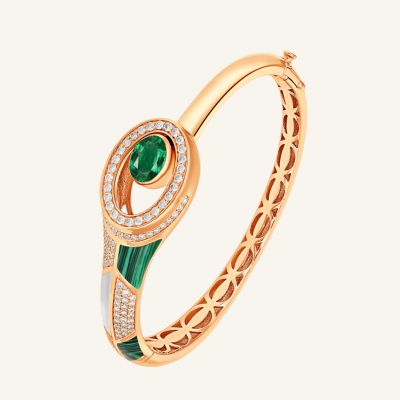
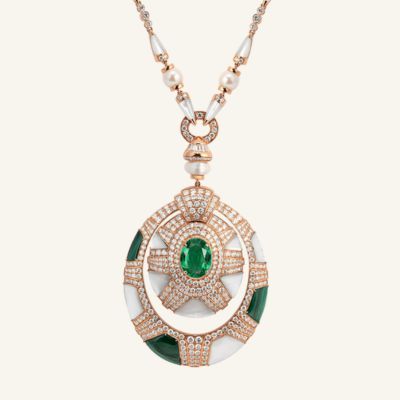
Rubies, pink sapphires, rhodolite garnets, morganite, and pearls all harmonize with rose gold's warm copper undertone in a way white gold cannot replicate. At Soit Belle, this pairing is the foundation of the entire design philosophy. The Bahr collection draws on Gulf pearl traditions and the natural warmth of rose gold to create pieces that feel connected to the sea. The Artistry collection places rubies and rhodolite in hand-formed rose gold settings where the metal doesn't merely hold the stone but elevates it.
The warmth of rose gold reads as intentional and considered, not incidental. That distinction is visible in every finished piece Soit Belle produces.
Maintenance costs and long-term investment value
The real cost of a ring isn't the purchase price alone. It includes every service, replating session, and professional cleaning you'll pay for over years of wear. This is where the pink gold vs white gold comparison diverges most significantly in practical terms.
The true ongoing cost of white gold
Rhodium replating typically costs between USD 30 and USD 80 per service, local pricing in Dubai and across the UAE can vary, and some jewellers quote higher, so confirm current rates directly with your preferred atelier. For a ring worn daily in the UAE's climate, replating is generally needed every six to twelve months before fading becomes noticeable, with some pieces lasting up to eighteen months depending on wear patterns. Over a decade, that adds up to multiple replating sessions, each requiring a short turnaround time. Replating services are available across Dubai and the Emirates; it is simply an ongoing commitment with a recurring cost that rose gold doesn't carry.
Rose gold's low-maintenance long game
Rose gold requires no plating, no color-correcting service, and no periodic restoration to maintain its appearance. Occasional professional cleaning and polishing keeps it at its best, but its color and structural integrity are self-sustaining. The patina that develops over years of wear is considered desirable by most wearers, adding depth and personality rather than signaling neglect.
Resale value: what actually holds worth
Both 18k rose gold and 18k white gold contain the same percentage of pure gold by karat, so at the most fundamental level, their intrinsic metal value is identical. Resale value in fine jewellery is driven primarily by stone quality, craftsmanship, and provenance. White gold pieces often require replating before resale to present well, which adds a preparation cost that rose gold doesn't require. Rose gold's appearance remains consistent without intervention, giving it a slight practical edge in resale readiness and first impression for any secondary buyer. For a broader comparison of white gold, yellow gold, and rose gold considerations, independent resources outline the visual and maintenance differences buyers typically encounter.
Making the right choice for your ring
The white gold vs rose gold comparison has no universal winner, only the right answer for your skin tone, lifestyle, allergy profile, and the stones you love.
White gold is the stronger choice for colorless diamond rings, cool-toned gemstone settings, and buyers who prefer a modern, platinum-adjacent aesthetic and don't mind scheduled replating. Rose gold is the stronger choice for warm and olive skin tones, ruby, rhodolite, pearl, and morganite pairings, and anyone who wants a metal that ages beautifully without intervention. In the UAE's climate specifically, rose gold's lower-maintenance profile makes it particularly well suited to everyday fine jewellery.
If you want to see what rose gold looks like when it's used with full artisan intention, Soit Belle's signature collections are the place to start. Each piece is crafted in rose gold paired with natural gemstones, designed over hundreds of hours of considered work, and built to be worn as a personal story rather than simply an accessory. Explore the collections at soitbelle.com and find the piece that becomes yours. For an example of Soit Belle's floral design language in a finished piece, view the White Gold Flower Diamond Ring with Blue & Yellow Sapphires, soitbelle.ae.