






Necklace vs Pendant Jewellery: What Is the Difference?

The words necklace and pendant are often used interchangeably, but they do not describe exactly the same type of jewellery. Understanding the difference can help you choose a piece that complements your personal style, wardrobe and occasion.
A necklace is the complete piece of jewellery worn around the neck. It may be made from gold, diamonds, pearls, natural gemstones or a combination of materials. A pendant, on the other hand, is the decorative element that hangs from a necklace or chain.
In simple terms, a necklace can be worn without a pendant, but a pendant normally requires a chain, necklace or cord from which to hang.
From delicate pearl jewellery and colourful gemstone pendants to a continuous natural diamond necklace, each design creates a different impression. The best choice depends on whether you prefer a complete decorative composition or one distinctive focal point.
What Is a Necklace?
A necklace is a complete piece of jewellery designed to be worn around the neck. It includes the chain, links, gemstones, pearls, decorative settings and clasp that form the finished design.
Necklaces can be simple and minimal, such as a fine 18K gold chain, or elaborate and luxurious, featuring several rows of diamonds or natural gemstones. According to the Gemological Institute of America, necklaces range from very short designs to exceptionally long styles and can be produced from many different materials.
Common necklace designs include:
- Gold chain necklaces
- Pearl strand necklaces
- Natural diamond tennis necklaces
- Multi-layer necklaces
- Chokers
- Station necklaces
- Natural gemstone necklaces
- Necklaces with fixed decorative centres
A necklace does not need to have a detachable ornament. For example, a tennis necklace is created from a continuous line of individually set diamonds. Its brilliance comes from the complete arrangement rather than from one central pendant.
The Soit Belle Tennis Elite collection includes diamond tennis necklaces created with round, marquise, pear and mixed diamond cuts, alongside matching bracelet designs.
What Is a Pendant?
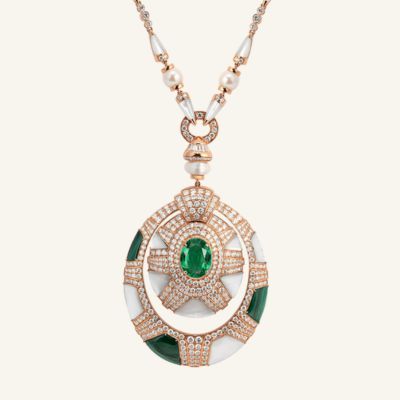
A pendant is a decorative element suspended from a chain or necklace. It is usually positioned at the centre of the neckline and serves as the main visual focus of the piece.
A pendant may feature:
- A single natural diamond
- A pearl
- A coloured gemstone
- A symbolic motif
- Arabic calligraphy
- A geometric design
- A personal initial or name
- A combination of diamonds and natural gemstones
Some pendants are removable, allowing the wearer to place them on different chains. Others are permanently attached to a necklace so that the decorative centre remains in the correct position.
A pendant can be small and subtle for everyday wear or large and detailed enough to become the central element of an evening look. Because attention is concentrated in one area, pendants are often chosen for symbolic, personalised or emotionally meaningful jewellery.
Necklace vs Pendant: The Main Difference
| Feature | Necklace | Pendant |
|---|---|---|
| Definition | The complete jewellery piece worn around the neck | The decorative element hanging from a chain |
| Can it be worn alone? | Yes | Usually no |
| Main visual effect | Decoration around part or all of the neckline | One central focal point |
| Common materials | Gold, pearls, diamonds and natural gemstones | Diamonds, pearls, gemstones, motifs and gold |
| Flexibility | Usually worn as one complete design | May be transferred between compatible chains |
| Best suited for | Layering, continuous brilliance and statement designs | Personalised, symbolic or focused styling |
Therefore, a pendant necklace is a type of necklace, but not every necklace contains a pendant.
Pearl Jewellery: Pearl Necklace or Pearl Pendant?
The distinction becomes particularly clear when comparing different forms of pearl jewellery.
A traditional pearl necklace is made from pearls arranged along a strand or incorporated throughout the necklace. The pearls collectively form the design, creating softness and luminosity around the neckline.
A pearl pendant usually features one pearl or a small composition of pearls hanging from a gold or diamond-set chain. Rather than covering the neckline, the pearl becomes a central point of interest.
The GIA evaluates pearl quality through seven factors: size, shape, colour, lustre, surface quality, nacre quality and matching. These factors help describe the appearance and quality of both loose and strung pearls.
The BAHR Pearl Jewellery collection by Soit Belle combines pearls, 18K gold and diamonds in pendants, earrings, bangles and culturally inspired designs. The collection includes pearl pendants in white, yellow and rose gold, as well as pieces incorporating Arabic calligraphy.
For designs created specifically for the neckline, explore the Soit Belle pearl necklaces and pendants.
For additional information about natural and cultured pearl terminology, the CIBJO Guide for Classifying Natural and Cultured Pearls provides an authoritative consumer and jewellery-industry reference.
When to Choose a Pearl Necklace
A pearl necklace may be the better choice when you want:
- A timeless and traditional appearance
- Soft luminosity across the entire neckline
- Jewellery for a wedding, formal event or important celebration
- A piece that can become a lasting heirloom
- A complete design that does not require an additional focal element
When to Choose a Pearl Pendant
A pearl pendant may suit you better when you want:
- A lighter everyday design
- One pearl to remain the centre of attention
- A contemporary interpretation of pearl jewellery
- A necklace that layers easily with other chains
- A personalised or symbolic design
GIA styling guidance also notes that pearls and diamonds complement one another visually: pearl lustre introduces softness, while diamonds contribute brilliance. Because diamonds are much harder than pearls, designs should prevent direct rubbing that could damage the pearl’s delicate surface.
Natural Diamond Necklace or Natural Diamond Pendant?
A natural diamond necklace creates a different effect from a natural diamond pendant.
In a diamond necklace, multiple diamonds may extend across the neckline. A tennis necklace is the best-known example, with a continuous sequence of stones creating uninterrupted brilliance.
A natural diamond pendant concentrates the sparkle in one central position. It may feature a solitaire diamond, a cluster, a symbolic shape or a central diamond surrounded by smaller stones.
When selecting a natural diamond piece, buyers should consider the four internationally recognised diamond quality factors: cut, colour, clarity and carat weight. The GIA created the 4Cs as a universal system for communicating diamond quality. You can learn more through the GIA guide to the 4Cs of diamond quality.
Choose a Natural Diamond Necklace When:
You want brilliance distributed across the neckline, a formal statement piece or a design that remains visually impressive without a central ornament.
Choose a Natural Diamond Pendant When:
You prefer understated elegance, one distinctive diamond arrangement or a versatile piece that can move easily between daytime and evening styling.
Soit Belle’s Elite collection includes diamond pendants, solitaire designs, tennis necklaces and tennis bracelets crafted for classic fine-jewellery styling.
Natural Gemstones in Necklaces and Pendants
Natural gemstones bring colour, individuality and character to both necklaces and pendants. However, the way the stones are arranged affects the final appearance.
A natural gemstone necklace can contain several stones distributed throughout the design. It may combine complementary colours, repeated cabochons or different gemstone varieties to create a complete composition.
A natural gemstone pendant normally places one primary stone at the centre. Diamonds, mother-of-pearl or smaller gemstones may be used around it to frame its colour and shape.
The Soit Belle Artistry Collection guide explores designs incorporating ruby, sapphire, malachite, opal, smoky quartz, peridot, amber and other natural gemstones with 18K gold and natural diamonds.
For a more complex necklace composition, the D’OPRAH white gold natural gemstone necklace combines natural tanzanite and amethyst with turquoise, mother-of-pearl and natural diamond accents.
Choose a Gemstone Necklace When:
You want several colours, a more elaborate design or a piece that creates visual impact across a larger area.
Choose a Gemstone Pendant When:
You want to emphasise one gemstone, colour or meaningful motif without making the entire necklace visually heavy.
How to Choose Between a Necklace and Pendant
Consider Your Neckline
The shape of your clothing can help determine which design looks most balanced.
A pendant naturally follows the downward line of a V-neck. Shorter necklaces work well with open, strapless or sweetheart necklines, while longer necklaces can complement high-neck or minimal clothing.
The pendant should normally remain visible rather than sitting partly beneath the garment.
Consider the Occasion
For everyday wear, a delicate natural diamond, pearl or gemstone pendant offers an elegant but understated choice.
For weddings, evening events and formal celebrations, a tennis necklace, multi-row diamond necklace or statement gemstone necklace can create a more complete and luxurious appearance.
Consider Versatility
A pendant may offer greater styling flexibility, particularly when it can be removed and worn with chains of different lengths or gold colours.
A necklace is usually purchased as a complete design. Although it may be less customisable, its proportions, gemstones and settings are created to work together precisely.
Consider the Desired Focal Point
Choose a pendant when you want the eye to be drawn toward one central design.
Choose a necklace when you want the jewellery to frame the neckline or create continuous detail around it.
How to Style a Necklace or Pendant with a Tennis Bracelet
A tennis bracelet can complement both necklaces and pendants because its continuous line of diamonds introduces balanced brilliance without necessarily competing with the neckline.
When wearing a bold diamond or natural gemstone necklace, choose a refined single-row tennis bracelet so the necklace remains the main statement.
When wearing a delicate pearl or natural diamond pendant, the bracelet can be slightly more prominent. A round, pear, marquise or emerald-cut tennis bracelet can add brilliance while maintaining an elegant relationship between the neck and wrist.
The Soit Belle Classic Round-Cut Tennis Bracelet features a continuous row of round-cut diamonds in 18K gold, while the Pear-Cut Diamond Tennis Bracelet offers a more distinctive silhouette.
For a coordinated look:
- Pair a pearl pendant with a delicate tennis bracelet.
- Pair a natural gemstone necklace with a bracelet in the same gold colour.
- Pair a natural diamond pendant with a classic round-cut tennis bracelet.
- Pair an elaborate diamond necklace with a restrained bracelet and simple earrings.
The objective is balance. One piece can lead the look while the others provide refined support.
Can You Put Any Pendant on Any Necklace?
Not every pendant is compatible with every necklace.
Before combining them, check:
- Whether the pendant opening is large enough to pass over the clasp
- Whether the chain is strong enough to support the pendant’s weight
- Whether the chain length positions the pendant correctly
- Whether the metal colours and finishes complement one another
- Whether the pendant remains centred while being worn
A substantial gemstone or natural diamond pendant requires a chain that can support it securely. A very fine chain may suit a lightweight design but may not provide enough strength for a heavier pendant.
Caring for Necklaces and Pendants
Store necklaces separately to prevent chains from tangling and gemstones from scratching one another.
Pearl jewellery should be treated particularly carefully. Avoid exposing pearls to perfume, hairspray and harsh cleaning products. Put pearl jewellery on after applying cosmetics and remove it before swimming, showering or exercising.
Natural diamond and natural gemstone pieces should also be checked periodically to ensure that their settings and clasps remain secure. Professional cleaning is preferable for elaborate designs or jewellery containing several types of stones.
Frequently Asked Questions
Is a pendant the same as a necklace?
No. A necklace is the complete piece worn around the neck. A pendant is the decorative element suspended from the necklace or chain.
Can a necklace be worn without a pendant?
Yes. Gold chains, pearl strands, tennis necklaces and natural gemstone necklaces can all be worn without pendants.
Is a pendant necklace suitable for daily wear?
Yes, provided that the pendant, chain and setting are appropriate for regular use. Delicate pearl, natural diamond and gemstone pendants are popular everyday choices.
Is a pearl pendant considered pearl jewellery?
Yes. Pearl jewellery includes pearl necklaces, pendants, earrings, bracelets, bangles, brooches and rings.
Can I wear a tennis bracelet with a pendant?
Yes. A tennis bracelet pairs particularly well with a natural diamond pendant, pearl pendant or refined natural gemstone design. Keep the scale of the two pieces balanced.
Which is better: a necklace or a pendant?
Neither is universally better. A necklace is ideal for continuous decoration and stronger visual impact, while a pendant is ideal for versatility and a defined central focal point.
Discover Necklaces and Pendants at Soit Belle
The difference between necklace and pendant jewellery comes down to structure and focus. A necklace is the complete piece framing the neck, while a pendant is the decorative element suspended from it.
A luminous pearl pendant creates a softer focal point. A natural diamond necklace provides continuous brilliance. Natural gemstones add colour and individuality, while a tennis bracelet can complete either look with balanced sparkle.
Explore Soit Belle Jewellery to discover pearl jewellery, natural diamond necklaces, gemstone pendants and tennis bracelet designs crafted in 18K gold for contemporary fine-jewellery styling.