






How top luxury jewellery brands truly compare in 2026

After many years in Dubai's fine jewellery world, I have watched buyers make the same costly mistake: choosing a brand because the name sounds right, then discovering six months later that the piece doesn't hold its value, doesn't carry a story worth telling, and doesn't feel personal in the way a jewel at that price point should. A genuine luxury jewellery comparison rarely centers on whose logo is most recognizable. It asks harder questions: who made this, with what material, and does the design have the kind of coherence that still resonates in twenty years?
At Soit Belle, our house was built on exactly those questions. As a Dubai-born fine jewellery house working at the intersection of Gulf craftsmanship heritage and narrative-driven design, we see the full market clearly, from the great Western maisons to the specialist ateliers that rarely appear in generic "best of" lists. This guide is written for UAE buyers who want to spend wisely, not just confidently.
What a real luxury jewellery comparison actually measures
The difference between fine jewellery, high jewellery, and fashion jewellery
Most buyers conflate three genuinely distinct categories, which leads to mismatched expectations on quality and resale. Fine jewellery uses precious metals and natural gemstones in standardized production; the craftsmanship is skilled, but the pieces are designed for repeatability and wearability. High jewellery, or haute joaillerie, is an altogether different proposition: one-off or severely limited atelier pieces requiring hundreds, sometimes thousands, of artisan hours, with stone-setting custom-built around each individual gemstone. Fashion jewellery uses plated metals and synthetic stones for trend-driven design at accessible price points, which is perfectly legitimate until someone pays fine jewellery prices for it. Understanding where a piece sits in this hierarchy is the starting point for any serious fine jewellery vs fashion jewellery evaluation.
Why brand prestige and craftsmanship are not the same thing
A globally recognized name does not automatically mean superior construction or gemstone quality. Some iconic brands prioritize design codes and instant recognizability over labor intensity. Others, Graff and Buccellati being clear examples, are defined specifically by their technical rigor: Graff through vertical integration in diamond sourcing and cutting, Buccellati through hand-engraved textures that require old-world techniques virtually no other house still practices. The comparison criterion should match what you actually want from a piece: a status symbol, a handcrafted investment, or something you will wear every single day.
The four criteria that actually matter in any luxury jewellery comparison
Throughout this guide, every comparison rests on four pillars: craftsmanship and materials, gemstone provenance and quality, design philosophy and longevity, and resale or value retention. These four pillars reappear in each section that follows, so you can track how different maisons perform across all of them rather than defaulting to name recognition alone. Keep them in mind and you will stop comparing logos and start comparing jewels.
Luxury jewellery comparison: craftsmanship and materials across the top maisons
Design-led vs. diamond-led vs. artisan-led houses
Cartier and Bulgari are design-led houses. Their iconic lines, the Love bracelet, Juste un Clou, and Serpenti, are built around recognizable visual codes that carry the brand's identity before the material quality does. Graff and De Beers London are diamond-led: they emphasize rough-stone sourcing, proprietary cutting, and traceable gemstone documentation as the core of their value proposition. Buccellati is artisan-led, defined by hand-engraved textures that place it in a different technical category from most maisons. This distinction influences everything from primary pricing to long-term secondary market performance, as each approach attracts a different buyer and commands a different resale dynamic.
What 18k gold, proprietary alloys, and ethical sourcing actually signal
Most top maisons use 18k gold across their fine jewellery lines. Some go further: Chopard committed to fully ethical gold across all jewellery since 2018, while Chanel developed its own Beige Gold alloy as both a design and brand signature. These choices signal something real about a house's manufacturing philosophy. For UAE buyers, confirming metal fineness on the hallmark is straightforward: look for 750 for 18k, 916 for 22k, or 999 for 24k. All three should appear alongside the approved assay mark required under UAE precious-metals regulation, refer to the Emirates Authority for Standardization and Metrology (ESMA) guidelines for the full list of accepted marks.
Gemstone provenance and what transparency looks like at the top end
The best houses document gemstone origin, support traceability programs, or use proprietary grading language. De Beers' Tracr provenance program, one of the industry's more developed traceability initiatives, has helped raise expectations for conflict-free sourcing across the sector. When buying, ask specifically about provenance, not just the certificate grade. A GIA or IGI report tells you what the stone is; provenance documentation tells you where it came from and who touched it before you did. For colored stones, SSEF, Gübelin, and GRS are the most respected labs in international auction markets, and any serious retailer selling fine rubies, emeralds, or sapphires should hold reports from at least one of them; independent verification from a reputable gemological laboratory such as Gulf Gem Laboratory offers additional confidence.
Resale and investment, a luxury jewellery comparison for UAE buyers
The data behind investment jewellery performance
Van Cleef & Arpels ranks as the top fine jewellery brand by resale value according to The RealReal's resale reporting, with the Alhambra collection retaining approximately 86% of retail price on average. Rebag's 2025 and 2026 resale platform data places Van Cleef & Arpels' overall average at around 112%, with Sweet Alhambra bracelets reaching 117% in strong market conditions. Cartier holds a solid second position: its Love collection retained around 78% in earlier RealReal reporting, with Cartier's overall average now sitting near 87% on secondary platforms. Tiffany's T collection retained approximately 69% across comparable periods. The key insight is that resale performance lives in specific iconic lines, not the brand broadly. Buyers should verify current figures directly with platforms such as The RealReal or Rebag, as conditions shift with market demand; for deeper analysis of specific maison resale trends, see commentary on Van Cleef & Arpels' resale value.
Why fashion-driven designs underperform at resale
Trend-led or seasonal designs from any house consistently underperform on the secondary market. A piece without a recognizable signature or a timeless motif loses secondary-market appeal quickly, regardless of which name is on the box. This is the strongest argument for buying heritage lines or artisan-crafted pieces with intrinsic material value: gemstone quality and metal content provide a price floor that trend-driven design simply cannot replicate. Any thorough designer jewellery ranking by resale performance will reflect this pattern.
What UAE buyers should know about high-end jewellery as an asset
The investment perspective for the UAE market is nuanced. High-value, iconic pieces from recognized maisons retain worth, but the strongest returns come from pieces with documented gemstone provenance, proper hallmarking, and complete original paperwork. Condition matters enormously. A Cartier Love bracelet with its original box, card, and service booklet will always command more on resale than the same bracelet without them. The brand name alone is not the asset; the specific line, the documentation, and the condition together are.
What Dubai-heritage fine jewellery houses offer that Western guides overlook
Dubai's goldsmithing legacy and what it means for design
Dubai has a very active fine jewellery ecosystem shaped by centuries of Gulf trade in gold, pearls, and precious stones. The Gold Souk's origins in Dubai Creek, the pearl-diving heritage of the Gulf, and the cultural emphasis on gemstone quality as a genuine store of wealth have produced a distinct design sensibility: jewellery that is visually generous and materially substantive at the same time. The local tradition treats ornament as the primary language, material prestige as central, and the interplay of commerce and craft as inseparable. This is not mass production dressed in luxury branding; it is a design culture with centuries of accumulated knowledge behind it.
How Soit Belle brings narrative and artisan craft together
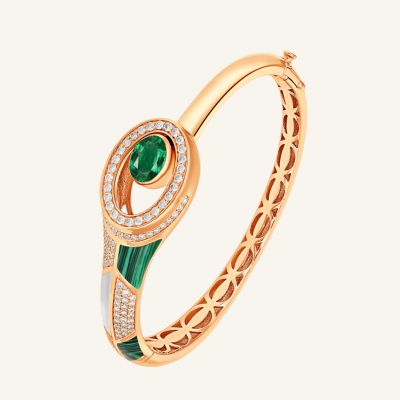
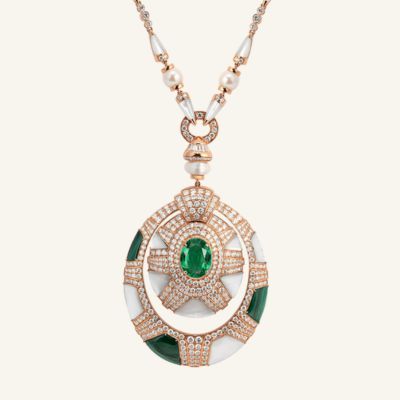
Soit Belle was built on a conviction that every piece should tell a story before it earns its place in a collection. The Bahr collection draws on the Gulf's pearl-diving heritage, translating maritime forms and the emotional weight of the sea into rose gold and natural pearl compositions. The Étoile collection works with celestial motifs, bringing the stillness of the night sky into wearable geometry. The Artistry collection, our most labor-intensive line, is a very labor-intensive undertaking, with each piece requiring hundreds of handcrafting hours, a commitment that places it firmly in high jewellery territory. Natural emeralds, rubies, rhodolite, turquoise, and pearls are selected for their individual character, not sourced to hit a price point, which means each piece carries a genuinely distinct material identity. Explore examples such as our Luxury Rose Gold Emerald Diamond Earrings | Fine Jewellery Dubai, soitbelle.ae to see how narrative and material combine.
The case for narrative-driven design over logo-driven luxury
For UAE buyers conducting their own luxury jewellery comparison, a Dubai-heritage house like Soit Belle offers something the established Western maisons don't always prioritize: a piece that connects to a specific story, a named collection, and a documented artisanal process rooted in the region you live in. This is not a rejection of the great maisons. Cartier's Love bracelet has earned its place in the canon, and Van Cleef & Arpels' Alhambra is a genuinely beautiful, genuinely valuable object. It is an argument for expanding your comparison beyond the familiar shortlist, particularly when you are buying in, and for, the Gulf.
Buying authenticated luxury jewellery in the UAE: what documentation to require
The documents every high-value jewellery purchase should include
A responsible purchase at this level requires a complete and matching set of documents. You need an itemized invoice showing the seller's legal identity, date, item description, metal type, and gemstone details. For designer pieces, a brand certificate or Letter of Authenticity should identify the piece, collection, model number, and materials. For diamonds or significant colored stones, an independent grading report from GIA or IGI is the minimum standard; confirm the report number matches any laser inscription on the stone itself. The UAE precious-metals regulation requires the UAE hallmark on the metal, 750 for 18k gold, 916 for 22k, and this hallmark should be present on any genuine fine jewellery piece. Every detail across documents must match before you complete the purchase.
Where to buy from authorised retailers in Dubai and Abu Dhabi
For the major Western maisons, authorised retail channels in the UAE include Bloomingdale's Dubai (Cartier, Bulgari, Chanel, Dior, Boucheron, Marli), Harvey Nichols Dubai under the Al Tayer Group's fine jewellery division, and Ounass UAE for Bulgari and Boucheron online. Brand-specific boutiques remain the safest channel for flagship lines. For Soit Belle, pieces are available directly through our official website with expedited delivery options across the UAE, including signature items such as the Luxury White Gold Opal Diamond Pendant | Find Jewellery Dubai, soitbelle.ae, and we provide full documentation with every sale.
Red flags to watch for before completing a purchase
Verify any lab report number directly on the issuing laboratory's website rather than relying on the paper copy alone. Confirm the seller's business name and details on the invoice are traceable and legally registered. Inspect the jewellery for matching engravings, serial numbers, and hallmarks against all paperwork before payment. For branded pieces, ask whether the original warranty card, service booklet, and branded packaging are included: these matter for future resale and servicing, and their absence is often a signal worth taking seriously.
Choosing well: the framework that matters
The great Western maisons earn their reputations. Their iconic lines genuinely hold value. Their craftsmanship, at its best, is exceptional. But the most discerning buyers don't limit their shortlist to the brands that appear in every generic guide. A Dubai-heritage house like Soit Belle, built on narrative collections, natural gemstones selected for their individual character, and a deeply labor-intensive artisan process, offers something materially and emotionally distinct: a piece that carries both substance and a story worth telling for generations. That is what separates a considered purchase from an expensive impulse. See examples from our narrative pieces such as the Luxury Rose Gold Chalcedony Diamond Earrings | Fine Jewellery Dubai, soitbelle.ae.
Whatever you choose, buy with full documentation, buy from authorised sources, and buy something that will still mean something twenty years from now. That is the luxury jewellery comparison that ultimately matters, and the standard every piece on your shortlist should meet. Explore Soit Belle's collections to see how narrative-driven fine jewellery is made for the UAE.